Most people start treating hair loss the wrong way round - they buy a serum, a shampoo and a supplement first, and only think about the cause when those do not work.
Hair loss has several common causes, and they need different treatments:
- Pattern hair loss (genetic sensitivity to hormones)
- Telogen effluvium (shedding after illness, childbirth, crash dieting or stress)
- Nutritional causes - low iron, vitamin D or vitamin B12
- Thyroid dysfunction
- Scalp disease - seborrhoeic dermatitis, psoriasis, or scarring conditions
- Often, a combination of the above
A product aimed at one of these will do little for another.
What a hair and scalp analysis actually checks
A proper assessment takes about 30–45 minutes and has four parts:
- History - when the shedding started, how fast, family history, diet, medication, recent illness or stress, and your general health.
- Examination - a pull test to gauge active shedding, the pattern of loss, and a look at the scalp for redness, scaling or scarring.
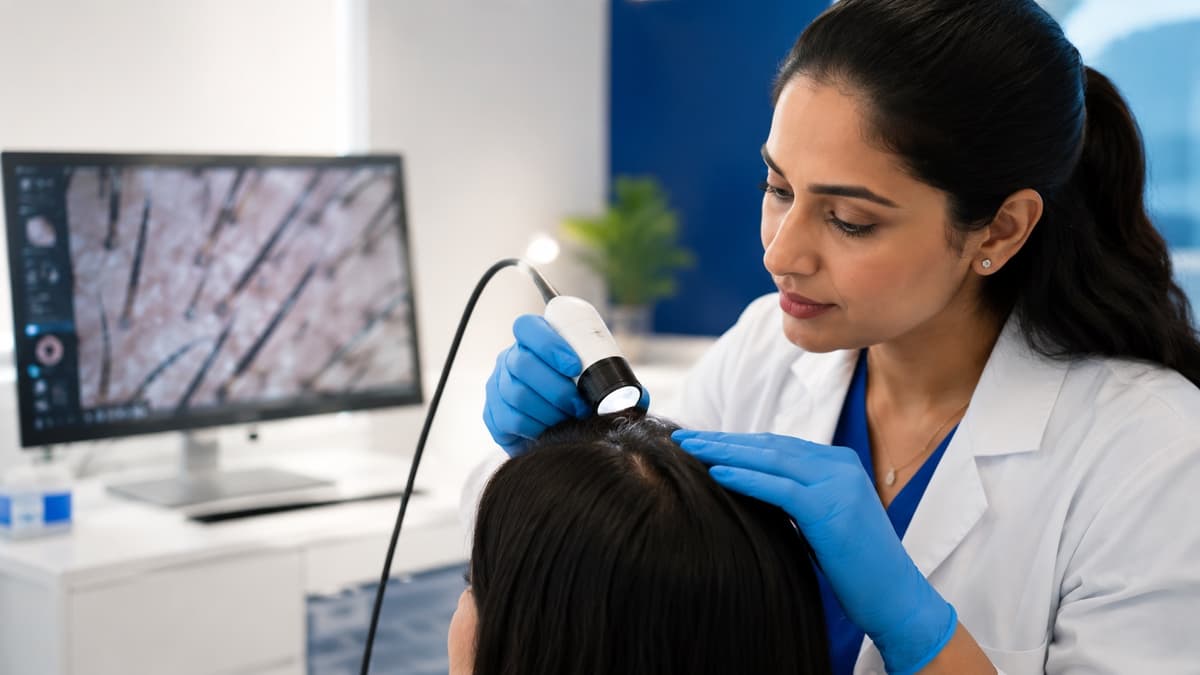
- Magnified imaging (trichoscopy) - a scalp camera measures hair density, the ratio of thick to thin hairs, and the number of follicular units in an area. This is how miniaturisation (the hallmark of pattern loss) is confirmed objectively.
- Targeted blood tests where indicated - ferritin, thyroid function, vitamin D and others.
Why it changes the plan
- If your ferritin is 12, no amount of PRP will fix the shedding until the iron is corrected.
- If it is early pattern loss with active follicles, medical therapy plus PRP or GFC makes sense.
- If the follicles in an area are gone, only a transplant will restore hair there - and knowing that saves you money on treatments that cannot work.
- If it is telogen effluvium after an illness, the honest answer is that it will largely recover on its own over a few months, and you mostly need reassurance and support.
The takeaway
An analysis gives you a diagnosis and a baseline. The diagnosis tells you which treatment is worth doing. The baseline - photographs and density measurements - lets you judge, three months later, whether the treatment is actually working.
This article is general information, not medical advice. Book a hair and scalp analysis to discuss your situation.